Photo: Wikimedia Commons contributor, CC BY-SA 3.0, via Wikimedia Commons
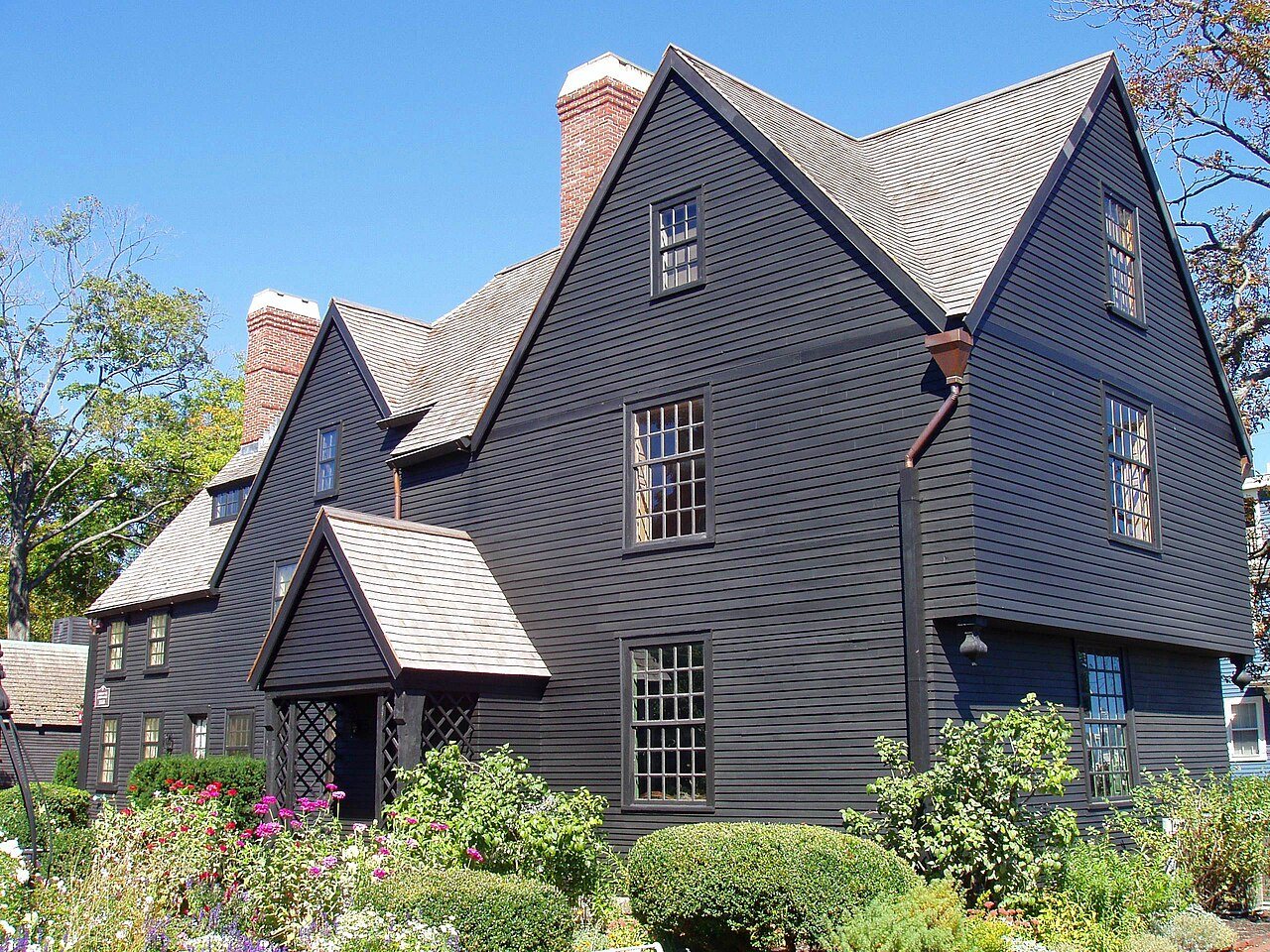
Every October, Salem, Massachusetts, fills up with people in witch hats, and a good number of them end up on Derby Street at the water's edge, looking up at a dark, steep-roofed wooden house with too many peaks to count at a glance. If you do count them, there are seven.
That's the House of the Seven Gables, the mansion behind Nathaniel Hawthorne's 1851 novel. It is one of the best-known old houses in America, and it's a genuine 17th-century building. What surprises many visitors is that when Hawthorne knew it, it didn't have seven gables at all.
The house you see today is partly a restoration, done early in the 20th century by a woman with a social mission and an architect with a romantic streak. I think that makes it more interesting, and it's a useful lesson for anyone who has ever argued about how to fix up an old home.
A merchant's house from 1668
The house was built in 1668 for John Turner, a Salem merchant and ship's captain. It was a big, prosperous house for its time, a timber frame with a central chimney, an overhanging upper floor and steep gables, the style architectural historians call First Period. Three generations of Turners lived there and added to it as the family's fortunes grew.
In 1782 the house was sold to Captain Samuel Ingersoll, another sea captain. By then fashions had changed, and over the years several of the gables were taken down to make the house look more up to date. That kind of remodeling was common. People treated old houses as homes to live in, and changed them to suit the times.
Hawthorne's cousin and the missing gables
Ingersoll's daughter, Susanna Ingersoll, inherited the house, and she was a second cousin of Hawthorne. He visited her there, and according to the story the house's own museum tells, she showed him the beams in the attic where the old gables had been and told him the house once had seven.
Hawthorne turned that into a novel about a cursed family and a decaying mansion. He always said the fictional house wasn't a portrait of any real building, and the book's Pyncheon house doesn't match the Turner house closely. But readers decided otherwise almost immediately, and the name stuck to the house on Derby Street.
There's a family echo too. Hawthorne was descended from John Hathorne, one of the judges in the Salem witch trials of 1692, and it's often said he added the "w" to his surname partly to put some distance between himself and that ancestor. Guilt passed down through a family is the backbone of the novel, so it's hard not to read something into it.
Caroline Emmerton's restoration
In 1908 the house was bought by Caroline Emmerton, a Salem philanthropist. Her interest went well beyond old buildings. Emmerton ran settlement work for the immigrant families who had moved into Salem's waterfront neighborhood, and she planned to open the house as a museum and use the admission money to pay for that work. The house opened to visitors in 1910, and the settlement association she founded still runs it.
To restore it she hired the Boston architect Joseph Everett Chandler. Chandler put back the missing gables, using the evidence left in the old frame, and restored the house toward what he believed it had looked like in the Turner years. Where the evidence ran out, he made educated choices. Some of those choices, by today's stricter standards, lean more toward the house people expected from the novel than toward a strict record of 1668.
The best-known example is the secret staircase that winds up beside the central chimney. Tours have long made a fuss of it, and children love it. It's generally understood to be part of the restoration era rather than something the Turners used, which I find more charming than disappointing.
Hawthorne's birthplace moves in next door
The site grew in 1958, when the small house where Hawthorne was born in 1804 was moved from its original spot on Union Street, a few blocks away, onto the museum grounds. Several other historic buildings were also moved there over the years, so the property now works as a little campus of old Salem houses by the harbor.
What restorers took from it
The House of the Seven Gables is a good example of a debate that every owner of an old home runs into eventually. Do you restore a house to one moment in its past, keep the layers that later owners added, or simply repair what's there?
Chandler's generation tended to pick a favorite period and rebuild toward it, filling the gaps with guesswork. Later preservation practice moved toward documenting everything and being careful about removing later changes, since those are part of the house's history too. Neither approach is wrong in every case. If you own an old house, though, it's worth writing down what you find before you change it, and keeping any old fragments you take out. Your future self, or the next owner, may want to know.
Visiting in October
If you're heading to Salem this week, expect crowds. The city's month-long Haunted Happenings events draw very large numbers in the days around Halloween, and the museum and much else in town can sell out. Booking a timed ticket ahead is the safest bet, and going early in the day helps. If you can wait until November, the house is quieter and, in my opinion, much better for actually looking at the timbers, which are the real stars of the place.