Every November I get the same kind of message from friends: a plant that was thriving in August is now dropping leaves, or going yellow at the bottom, or just sitting there looking sorry for itself. Nine times out of ten nobody did anything wrong. The house changed around it.
Between now and March, most homes get darker, warmer at the radiator and colder at the window, and much drier once the heating runs all day. Plants feel all of that. The good news is that the fixes are mostly about doing less, and moving things a few feet.
Why plants struggle once the heating comes on
Most common houseplants come from tropical or subtropical places where day length does not swing much through the year. In a northern winter they get fewer hours of weaker light, so they grow far more slowly. A plant that is barely growing uses much less water, which is where most of the trouble starts.
Central heating adds a second problem. Warm air holds more moisture, so heated indoor air tends to be dry, and plants with thin leaves (ferns, calatheas, peace lilies) often react with crispy brown edges. Then there is the window itself, where the glass can be much colder than the room on a winter night, especially in older single-glazed frames.
Move them closer to the light, but not onto the glass
The single most useful change is placement. A spot that was perfect in summer, a few feet back from a south or west window, may now be too dim. Moving plants closer to the brightest window you have often makes a visible difference within a couple of weeks.
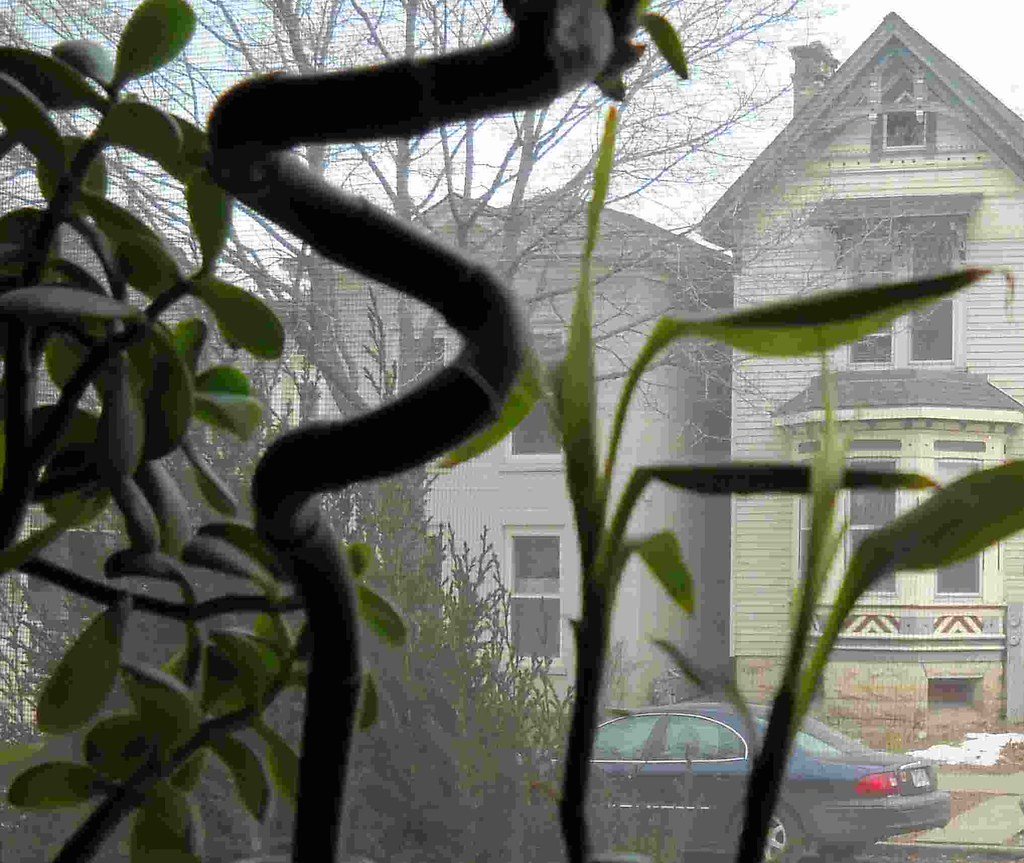
Two cautions. Leaves that touch cold glass can get damaged on frosty nights, so leave a small gap. And if you close curtains or blinds at night, check you are not trapping plants between the curtain and the window, where it gets coldest of all. (I learned that one with a very unhappy pothos.)
It also helps to wipe the dust off broad leaves with a damp cloth. Dust cuts down the light that reaches the leaf, and in winter there is not much to spare. Turning pots a quarter turn every week or so keeps them from leaning hard toward the window.
Water less often, and check before you pour
Overwatering kills more houseplants in winter than anything else, because the soil stays wet far longer when the plant is barely growing. Soggy roots run short of oxygen and start to rot, and the first signs (yellowing lower leaves, a wilting plant in wet soil) look confusingly like thirst.
So drop the fixed schedule. Push a finger into the soil a couple of knuckles deep and water only when it feels dry at that depth for most leafy plants. Succulents and cacti can go much longer, and many of them do best when left almost dry until spring. When you do water, water thoroughly, let the excess drain out and empty the saucer. Room-temperature water is kinder to roots than water straight from a cold tap.
Fungus gnats, the tiny black flies that hover around pots, are a good warning sign. They breed in damp soil, so a sudden cloud of them usually means you have been watering more than the plant can use.
Skip the fertilizer and deal with dry air
Most houseplants do not need feeding in winter. With little new growth, fertilizer salts can build up in the soil and burn the roots. I stop feeding around now and start again when new leaves appear in spring. The exception is plants that flower in winter, such as Christmas cactus, which can have a light feed while they are in bloom.
For dry air, grouping plants together helps a little, because they release moisture into the air around them. Standing pots on a tray of pebbles with water below the top of the stones can help too, though the effect is modest. Misting feels useful but the water evaporates within minutes, so I do not rely on it. If you already run a humidifier for your own comfort, put the fussiest plants in that room.
Keep plants away from radiators, heating vents and the blast of cold air from a door that opens often. Sudden swings in temperature are a common reason for leaves dropping all at once.
A quick winter checklist
If you only do a handful of things this month, make it these:
Move plants to your brightest window, a little back from the glass.
Stretch the time between waterings and check the soil first.
Empty saucers so pots never sit in water.
Stop fertilizing until spring, except for winter bloomers.
Pull plants away from radiators, vents and drafty doors.
Some leaf drop over winter is normal, especially for plants that were moved indoors after a summer outside, and many plants just look a bit tired until March. If the stems are firm and the roots are not mushy, it will very likely bounce back once the days get longer. Mine always do, eventually, and usually just after I have given up on them.
See more of us on GoogleAdd Home Knowledge as a preferred source and our stories can show up more often for you in Top Stories.