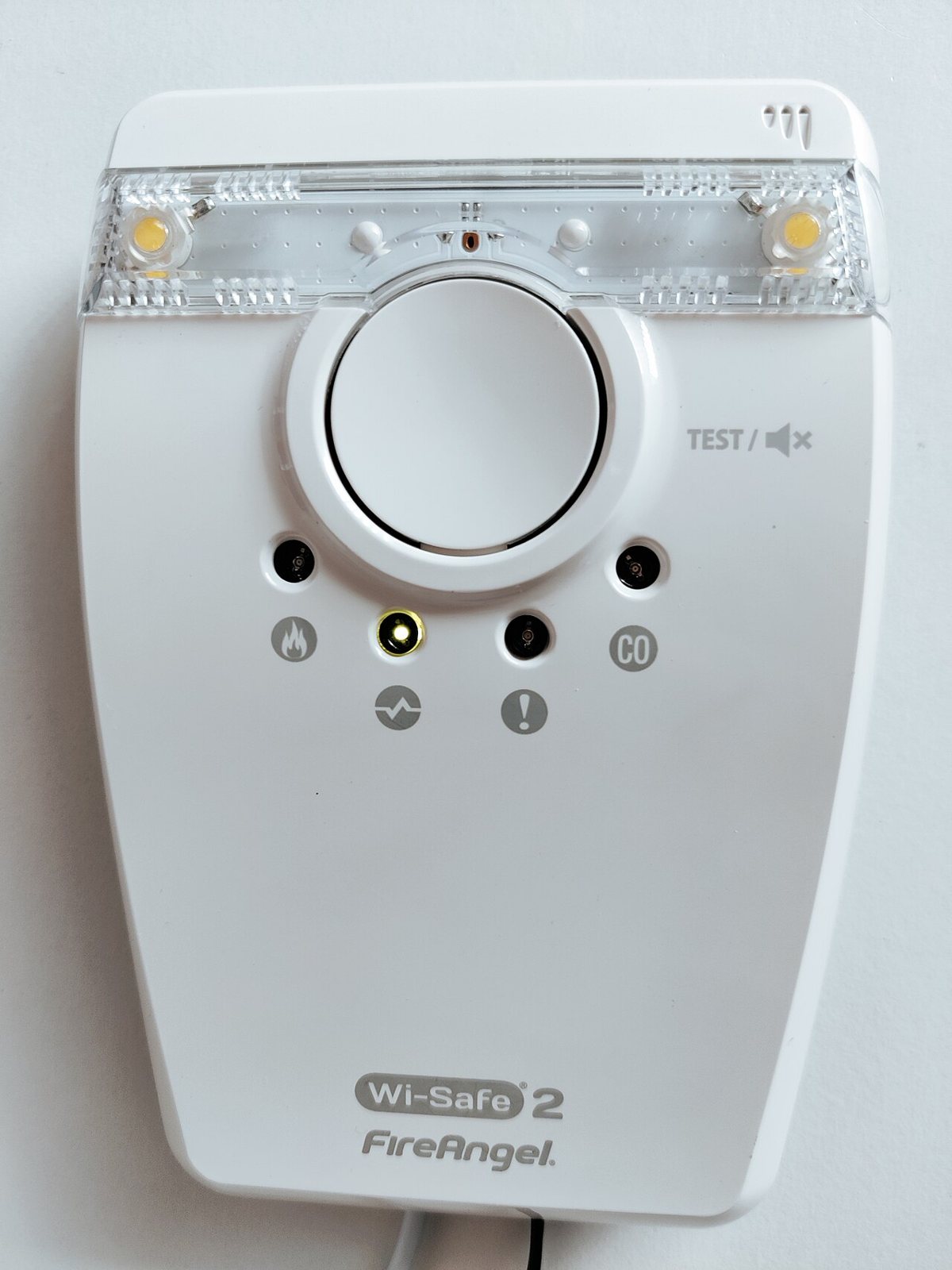
Photo: Andy Mabbett, CC BY-SA 4.0, via Wikimedia Commons
Daylight saving time ends in most of the United States at 2 a.m. on Sunday, November 1, and the clocks go back an hour. For years, fire departments have used that weekend to remind people to check their smoke alarms, partly because it's a date everyone already notices twice a year.
I like the habit. A smoke alarm is one of those things you install, forget, and then only think about at 3 a.m. when it starts chirping. Ten minutes this weekend saves you that, and a working alarm is the whole point of having one.
Here's what I'd do, room by room, with nothing more than a step stool and a vacuum.
Press the test button on every alarm
Start with the obvious. Press and hold the test button on each smoke alarm until it sounds. A loud, piercing beep means the horn and the battery are working. A weak sound, or nothing, means the battery or the alarm needs replacing.
If your alarms are interconnected (wired or wireless so that when one goes off they all do), test one and walk the house to make sure the others join in. If one stays silent, that's the unit to look at.
Do the same for carbon monoxide alarms. Many homes now have combination smoke and CO units, which usually have one test button that runs both. Check the label so you know which kind you have.
The US Fire Administration and the National Fire Protection Association both recommend testing monthly, not just twice a year. I'll admit I'm better at the twice-a-year version, which is exactly why tying it to the clock change works.
Check the date on the back
This is the step most people skip. Twist the alarm off its mounting plate and look at the back for a manufacture date.
The NFPA's guidance is to replace smoke alarms 10 years after the date of manufacture, whether or not they still seem to work, because the sensors degrade over time. Carbon monoxide alarms tend to have a shorter life. Many are rated for somewhere between five and ten years, depending on the model, so go by the manufacturer's instructions printed on the unit. Newer CO alarms often chirp or show an end-of-life warning when they're done.
If you can't find a date at all, the alarm is probably old enough to replace. Write the install date on the new one with a marker. Future you will appreciate it.
Batteries: swap or leave alone
What you do here depends on the alarm. Older alarms with a replaceable 9-volt or AA battery should get a fresh one at least once a year, and the clock change is an easy day to do it. Use the battery type listed on the alarm.
Many newer alarms have a sealed 10-year lithium battery. You don't change those. When the battery runs down, the whole alarm gets replaced. Hardwired alarms connected to your home's electrical system usually have a backup battery too, and that one still needs checking.
That chirp every minute or so is almost always a low battery. Don't pull the battery out and leave the alarm on the counter "for later." That's how a house ends up with no working alarm.
Clean off the dust and cobwebs
Dust and insects in the sensor chamber can cause false alarms or dull the response. Run a vacuum with a soft brush attachment gently over the vents. Don't use cleaning sprays or paint near an alarm, and never paint over one (it happens more than you'd think during redecorating).
While you're up there, look at where each alarm is. Smoke alarms in or right next to a kitchen tend to go off every time someone makes toast, and that's how people end up disconnecting them. The NFPA advises keeping them about 10 feet from cooking appliances where possible.
Make sure you have enough of them
The NFPA recommends a smoke alarm inside every bedroom, outside each sleeping area, and on every level of the home, basement included. Carbon monoxide alarms belong outside each sleeping area and on every level as well, and in any home with fuel-burning appliances, a fireplace, or an attached garage.
If you're missing some, add them. Interconnected alarms are worth it if you're buying new, because a fire in the basement will wake you even with the bedroom door shut. Building codes on new construction often require them already. Local rules vary, so if you're renting, check with your landlord about who supplies and maintains them.
If the CO alarm goes off
A smoke alarm going off has a visible reason most of the time. A CO alarm usually doesn't, because carbon monoxide has no color or smell. If yours sounds, get everyone, including pets, outside into fresh air and call 911 or your local fire department from there. Don't go back in to look for the source. Let the fire department or a qualified technician find it.
Your ten-minute checklist for Sunday
Test every smoke and CO alarm. Check each manufacture date and replace anything over 10 years old for smoke, or past its rated life for CO. Swap replaceable batteries. Vacuum the vents. Count your alarms against every bedroom and every level. Then go enjoy the extra hour of sleep, which is the one good thing about the end of daylight saving time.