Photo: Easysayg, CC BY-SA 4.0, via Wikimedia Commons
Stand close to a window on a cold night and you can feel it. The glass is colder than everything else in the room, the air next to it sinks, and your ankles get the news a few seconds later. A wall has insulation and a window mostly doesn't. According to the US Department of Energy, windows make up about a tenth of a home's surface but can account for as much as 30 percent of the energy used for heating and cooling.
New windows are one answer, and an expensive one. What you hang in front of the old ones can do a surprising amount of the work, and it happens to be one of the nicer decorating jobs of the year.
I'll admit a bias here: I think most rooms are under-curtained. Fortunately for me, the physics is on my side, as long as you hang them properly.
Why thin curtains barely help
A window covering works by trapping a still layer of air between itself and the glass. If that air can escape, the covering isn't doing much. Warm room air gets drawn in behind the fabric at the top, chills against the glass, and pours out of the bottom onto the floor. That's the draft people complain about, and in many rooms it isn't a leak at all.
So there are two things that matter. The first is the fabric itself, since heavier, tighter weaves and extra layers slow heat down more. The second is the seal around the edges, and it matters just as much. A plush velvet panel hanging loose on a short rod, with air moving freely around all four sides, will disappoint you.
What to look for in a curtain
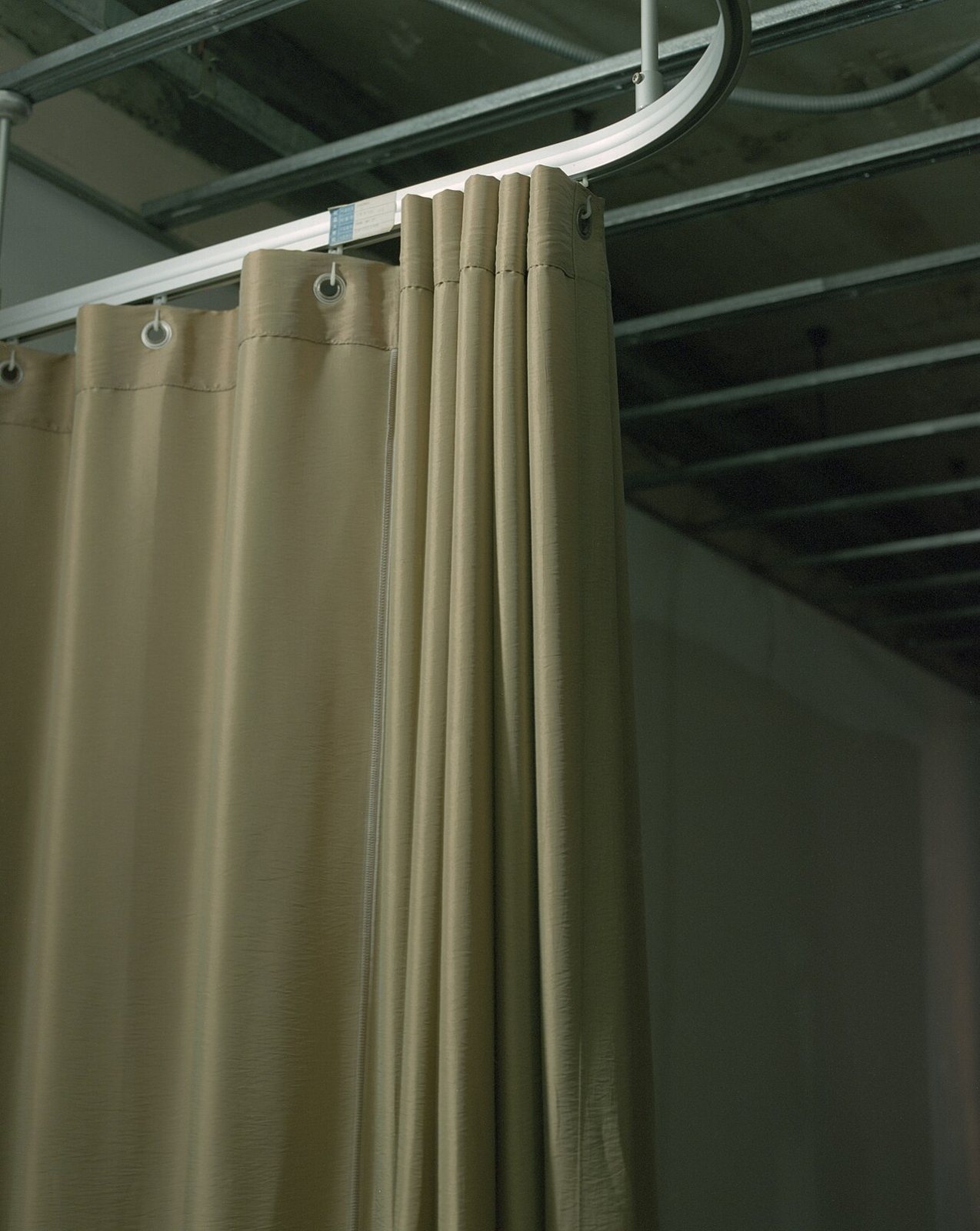
Weight is your friend. Look for a dense weave and a proper lining, and if you're having curtains made, ask about an interlining, which is a soft blanket-like layer sewn between the face fabric and the lining. It's the old-fashioned trick behind those heavy, generous curtains in country houses, and it also makes them hang beautifully.
Sheers and unlined linen are lovely and have their place, but that place isn't a north-facing bedroom in January. Keep them for mild rooms, or layer them.
The words "thermal" and "blackout" on a packet tell you less than the feel of the fabric in your hand. Plenty of thermal curtains are perfectly good, and some are ordinary polyester with a thin backing. Hold it up to the light and bunch it in your fist, and go with the heavier one if your rail can take it.
Hang them to trap the air
This is the part most people get wrong, and it costs nothing extra once you've bought the rod. The Energy Department's advice for draperies is to hang them as close to the glass as you can and let them fall to the sill or the floor. Closing off the top helps too, with a pelmet or cornice, or by mounting the rail tight to the ceiling.
For the sides, choose a rod that extends well past the frame, so the fabric overlaps the wall when closed. It also makes the window look bigger, and it lets you pull the curtains clear of the glass in the daytime. For fullness, a common rule of thumb is about twice the width of the window in fabric, which sounds like a lot until you see how skimpy the alternative looks.
Floor-length is the prettiest and warmest option, with one big exception. Don't drape curtains over a radiator or a heating vent. You'll send your heat up behind the fabric and straight into the glass, and you'll create a fire risk with some heaters besides. Over a radiator, use a sill-length curtain or a fitted shade.
Where cellular shades beat everything
If the goal is warmth more than looks, the honeycomb shade is hard to beat. Those pleated shades trap air in rows of small cells as well as behind the shade. In a study at Oak Ridge National Laboratory described by the Energy Department, cellular shades saved up to 20 percent on heating energy compared with having no shades at all, and they beat vinyl blinds on heating too. That's worth knowing, since vinyl or metal blinds cover the windows in a majority of American homes.
The word "up to" is doing some lifting there, and your result will depend on your climate, your windows and how often you lower them. A close fit inside the frame makes a real difference. For ratings, look for the Attachments Energy Rating Council label, which is the closest thing this market has to an independent score.
My favorite answer is to use both. A plain shade tight to the glass does the insulating, and a curtain in front does the decorating, and each makes the other work harder. If you have small children at home, choose cordless versions.
A routine for the darker months
The best curtains in the world won't help if you leave them open at night, or closed all day. On sunny days, open up the coverings on south-facing windows and let the free heat in. Close them as the sun goes down, before the room has had a chance to cool.
Morning opening helps for another reason. Moisture can collect on cold glass behind heavy fabric, so letting the window breathe for the day helps you keep an eye on condensation and mold around the frame.
If you want a project for this weekend, pick the room you sit in most in the evening and start there. Measure the window, check that your rod runs past the frame, and see whether the curtains reach the sill. Those three checks will tell you whether you need new curtains at all, or just a longer rod.