Photo: Danielle Walquist Lynch, CC BY 2.0, via Flickr
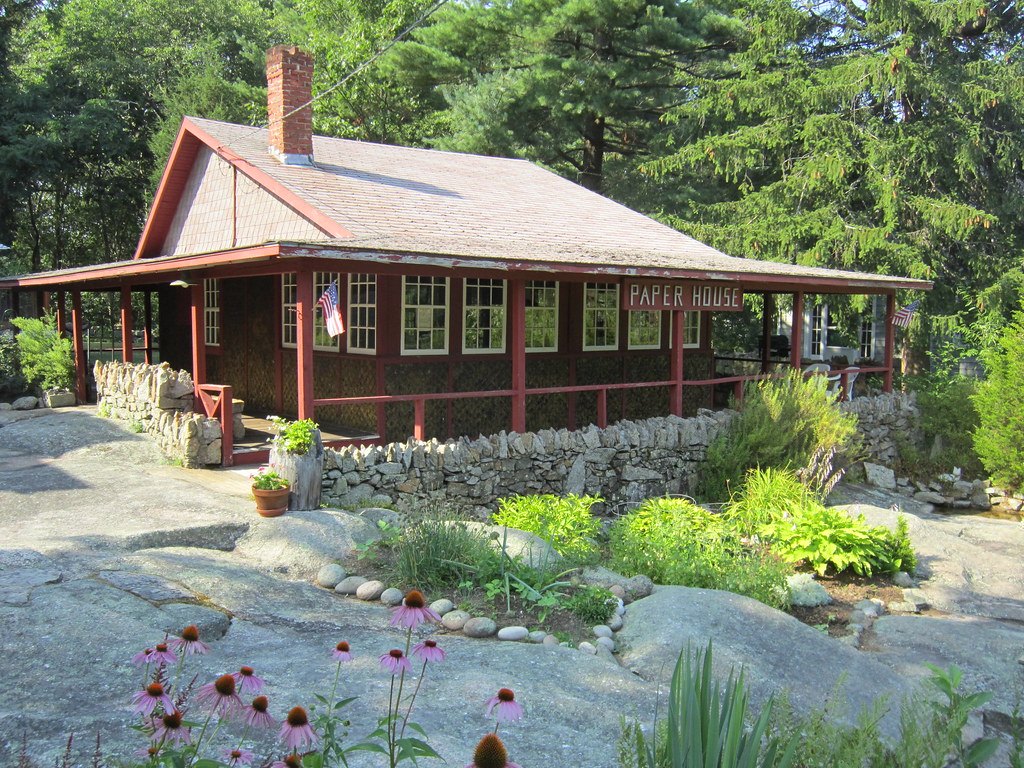
Elis Stenman spent his working life thinking about wire and machines. He was a mechanical engineer from the Boston area who designed the machines that made paper clips, a job that sounds like the setup to a joke given what he did on his days off. Starting in 1922, he built himself a summer cottage in Rockport, Massachusetts, with walls made of newspaper.
He didn't mean it as an art project. He had an idea about insulation and a long-standing irritation with how much newsprint people threw away, and he seems to have been curious to see what would happen. What happened is that the walls are still there, more than a hundred years later, and you can still read them.
A proper frame and a very odd skin
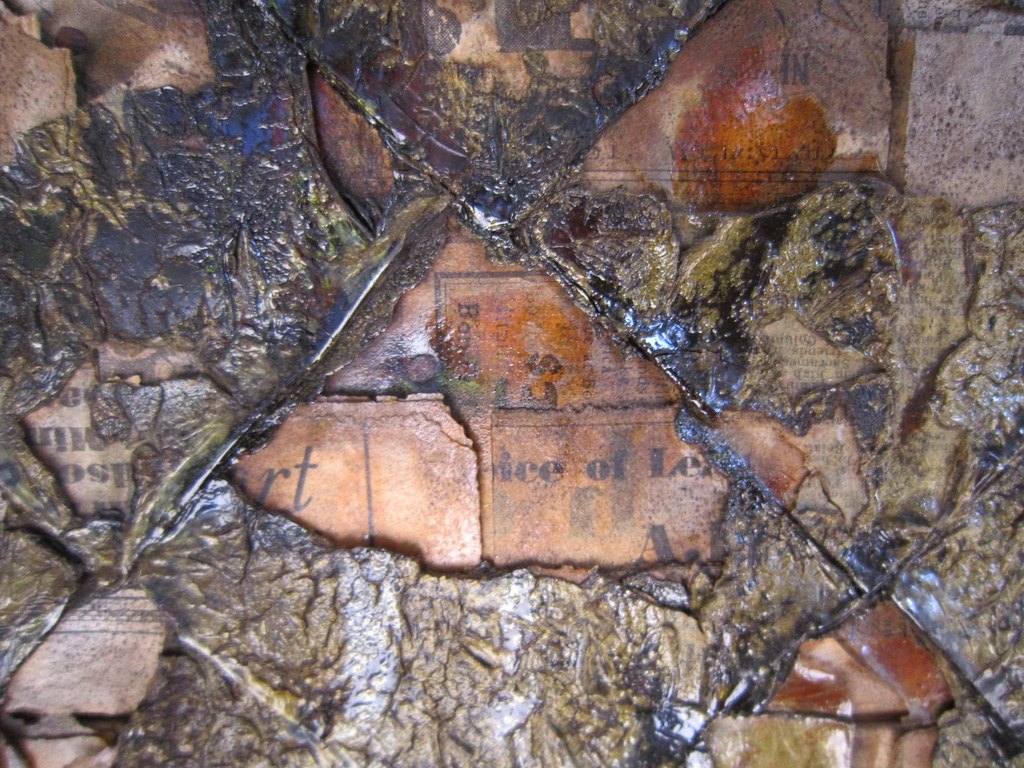
Close-up of a varnished Paper House wall, with layers of folded newspaper and bits of old type showing through (Photo: Danielle Walquist Lynch, CC BY 2.0, via Flickr)
The first thing to understand is that this isn't a house held up by paper. Stenman was an engineer and he built a conventional wooden frame, with a wooden roof and wooden floors. Where he parted ways with everybody else on the Cape Ann coast was in what filled the spaces.
The walls are about an inch thick and made of roughly 215 layers of newspaper. He pressed the sheets together with a homemade paste of flour and water, with sticky additions such as apple peel, and then coated the result with varnish. Harvard Magazine, which profiled the place last year, reported that he used marine varnish, the same stuff you would put on a boat. That detail makes the most sense of anything in this story. If you're going to leave paper out in a New England winter, you treat it like something that's going to get wet.
By most accounts, the plan was to clad the walls later. Bare varnished newspaper was only supposed to be a test of how the material held up. It held up well enough that he never covered it.
Then he started on the furniture
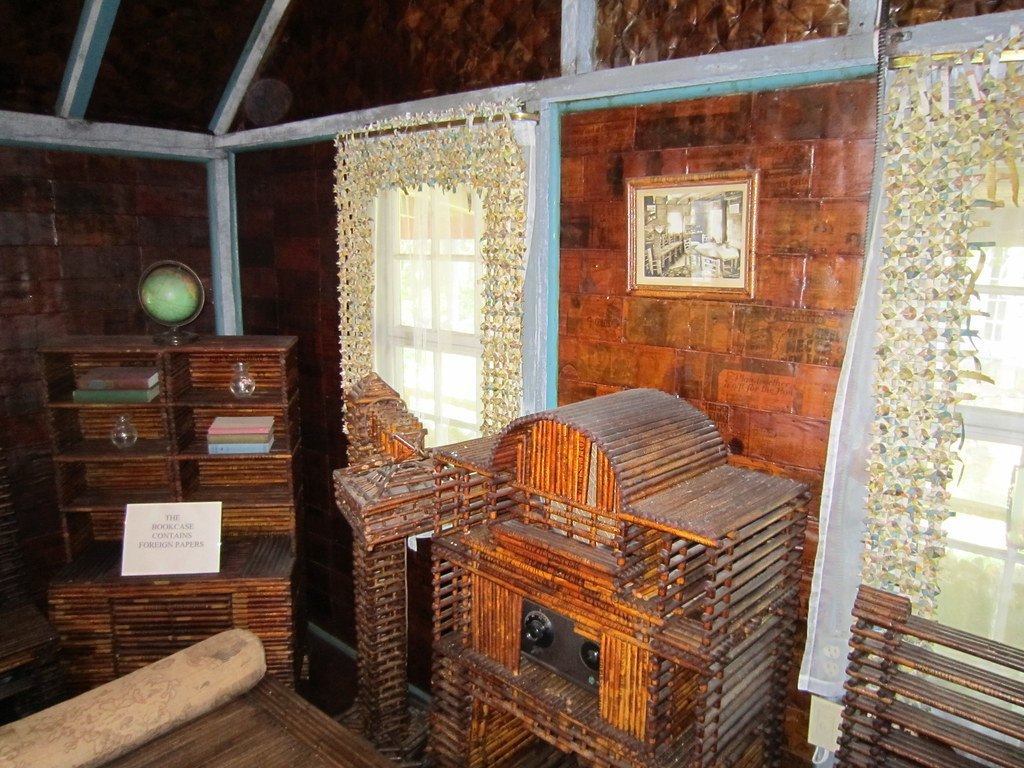
Inside the Paper House, a desk and shelves built from rolled newspaper stand against a wall of glued sheets (Photo: Danielle Walquist Lynch, CC BY 2.0, via Flickr)
Once the walls were up, by about 1924, Stenman had a two-room cottage and, one assumes, an alarming quantity of newspaper left. So he kept going.
He rolled sheets into tight logs, varnished them and built furniture from them: chairs, tables and lamps. Some of the pieces come with a theme. The writing desk was built from accounts of Charles Lindbergh's 1927 flight across the Atlantic. The radio cabinet carries coverage of Herbert Hoover's 1928 campaign. A grandfather clock uses papers from the capital cities of the 48 states of the day.
The piano is the one piece that cheats. It's a real piano with newspaper covering it, which seems fair, because I can't imagine what a paper soundboard would do. And there's a small disagreement about the mantel above the brick fireplace, with one source calling it paper and another saying it isn't. I find it oddly reassuring that a building this strange still has unresolved questions after a century.
All told, the house and its contents used about 100,000 newspapers, collected over some 20 years with help from friends and neighbors.
Living in it, more or less
Elis and his wife, Esther, used the place as a summer home. It had a kitchen, and the Stenmans drew water from a pipe outside. The bathroom was an outhouse, which was not made of paper. (Worth confirming, because by this point you can't take anything for granted.)
People heard about it fast. By 1927 the cottage had become a local attraction, and visitors' money was covering Stenman's running costs. He sold postcards of it too. In 1930 the couple moved next door and turned the paper house into a kind of informal museum, a role it has played ever since. Nobody has lived in it since then.
Stenman died in 1942. The house stayed with his family, who still look after it, working against the two things that threaten it most: harsh coastal weather and burrowing animals. A porch was added in the 1930s to give the walls some shelter, and it's the only obvious admission that newspaper needs a bit of help.
What a paper wall teaches you about a real one
There's a practical lesson under the novelty, and it's the same one any old-house owner learns eventually. Most building materials last about as long as you can keep water out of them.
Stenman's paper has lasted because it was sealed and then protected, and because somebody has kept an eye on it for a hundred years. Your clapboard, your window frames and your deck work on the same terms. This is why the dull advice about repainting on schedule, keeping gutters clear and fixing a failed caulk line matters more than the material you picked in the first place. An inch of well-kept varnished newsprint has outlasted plenty of neglected timber, which is a slightly embarrassing thing for timber.
I wouldn't recommend it as a building method, in case that needs saying. Modern fire codes alone would end the conversation.
Visiting the Paper House
The house stands at 52 Pigeon Hill Street in the Pigeon Cove part of Rockport, on the tip of Cape Ann north of Boston. It's closed for the cold months and normally opens in spring, with Harvard Magazine giving the season as May through October, so this is one to put on next year's list. Check paperhouserockport.com before you go.
Admission was 25 cents in the early days and was reported at $3 last year, paid on an honor system, in cash through a mail slot at the house next door or by Venmo. That has to be one of the better deals in New England. Bring reading glasses. The best part of the visit is standing with your nose an inch from a wall, reading the news from the 1920s.
See more of us on GoogleAdd Home Knowledge as a preferred source and our stories can show up more often for you in Top Stories.