Photo: Balon Greyjoy, CC BY-SA 4.0, via Wikimedia Commons
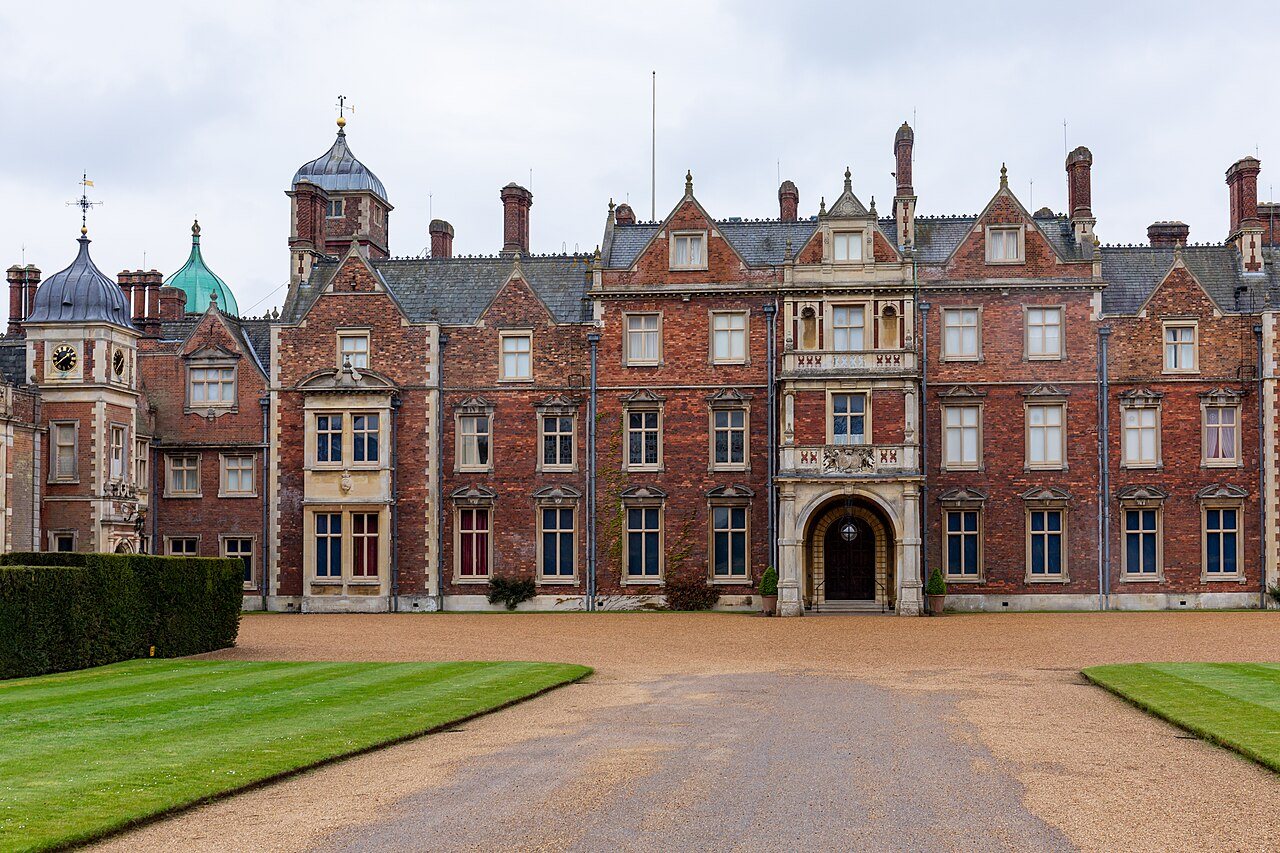
Every December the British royal family drives north-east from London to a large red-brick house in rural Norfolk, about 110 miles away, and spends Christmas there. The house is Sandringham. It isn't a palace and it doesn't belong to the state. The monarch owns it privately, the way you or I might own a house, just with a lot more land and considerably more staff.
That private status is one of the odder facts about it. Buckingham Palace and Windsor Castle are held by the Crown and pass with the job. Sandringham, like Balmoral in Scotland, passes from one monarch to the next as personal property.
The house itself is younger than people tend to assume, and its story says a lot about how the Victorians thought a country home ought to look.
Bought for a prince who needed somewhere to go
Queen Victoria and Prince Albert bought the Sandringham estate in 1862 for their eldest son, Albert Edward, the Prince of Wales. He was about to marry Princess Alexandra of Denmark, and his parents wanted him to have a country home of his own, ideally one with good shooting and some distance from the distractions of London. (Whether that worked is a matter for a different kind of history column.)
The existing Georgian house on the site didn't satisfy the prince for long. In 1870 it was largely replaced by the building you see now, designed by the architect A. J. Humbert, who had worked for the royal family before.
A Victorian idea of an old English house
Sandringham is built in a style usually called Jacobethan: Victorian architecture borrowing from the great Elizabethan and Jacobean houses of around 1600. That means red brick with pale stone trim, shaped gables, tall decorative chimneys and big mullioned windows. It's meant to look settled and old. It was, in fact, brand new.
I'll admit the effect is a bit busy for my taste, a lot of gables competing for attention, but it suits the setting. Norfolk is flat, open country, and a house with that much going on at the roofline reads well from a distance across the lawns.
The prince kept adding to it. A large ballroom wing went up in the 1880s, because a man who entertained as much as he did needed somewhere to put everybody. A fire in 1891 damaged parts of the upper floors and led to more rebuilding. Inside, the rooms are comfortable more than grand: wood paneling, family portraits, the clutter of a house people actually lived in.
The clocks that ran half an hour fast
The most famous Sandringham quirk is "Sandringham time." The Prince of Wales had the clocks on the estate set 30 minutes ahead of the rest of the country, the usual explanation being that it squeezed more daylight out of short winter afternoons for shooting.
The custom lasted through his reign as Edward VII and through his son George V's. It ended in 1936, when Edward VIII put the clocks back to normal time soon after becoming king. Given how short his reign turned out to be, it's one of the few lasting changes he made.
Where royal Christmas became a broadcast
Sandringham's place in British Christmas comes largely from George V, who loved the house. On Christmas Day 1932 he made the first royal Christmas broadcast by radio from Sandringham, with a script written by Rudyard Kipling. Elizabeth II's first televised Christmas message, in 1957, was also filmed there.
The house has seen a lot of family history in between. George VI was born on the estate in 1895 and died at Sandringham in 1952. Diana, Princess of Wales, was born at Park House on the estate in 1961, though that was before any royal connection beyond being neighbors.
The Christmas routine that gets reported each year is fairly consistent: the family arrives on Christmas Eve, follows the German-influenced custom of opening presents that evening, and walks to the small church of St Mary Magdalene on the estate on Christmas morning, where crowds gather outside to watch.
Visiting Sandringham yourself
You can't drop in at Christmas, obviously. But the house, museum and gardens normally open to paying visitors for a season from spring into autumn, and the wider country park on the estate is generally open year-round. Opening dates change, so check the official Sandringham website before you plan a trip.
If you go, look past the royal connection for a moment and see it as a house. It's a useful example of how a wealthy Victorian family wanted to live: a newly built house dressed up as an old one, with modern comforts behind the period front. Plenty of smaller suburban homes copied that same idea in miniature over the following decades, gables and all, and you may well live near one.
See more of us on GoogleAdd Home Knowledge as a preferred source and our stories can show up more often for you in Top Stories.